

Written by Tillie Zhou
Founder, Byron Custom Guitars · 10+ years in acoustic guitar craft
Tillie grew up in a timber-working family in rural China and trained at a Beijing guitar factory before founding Byron Custom Guitars. She oversees every custom build consultation and has personally guided hundreds of players through the instrument design process.
Walk into any guitar shop and you'll see two versions of nearly every acoustic guitar: a standard acoustic, and an acoustic-electric that costs $50–$200 more with a small control panel on the side. The difference looks simple. The implications — for where you can perform, how you record, and what you can do with your sound — are far greater.
This guide explains exactly what an acoustic-electric guitar is, how the pickup system works, when you genuinely need one, and which models deliver the best value at every budget.
What Is an Acoustic-Electric Guitar?
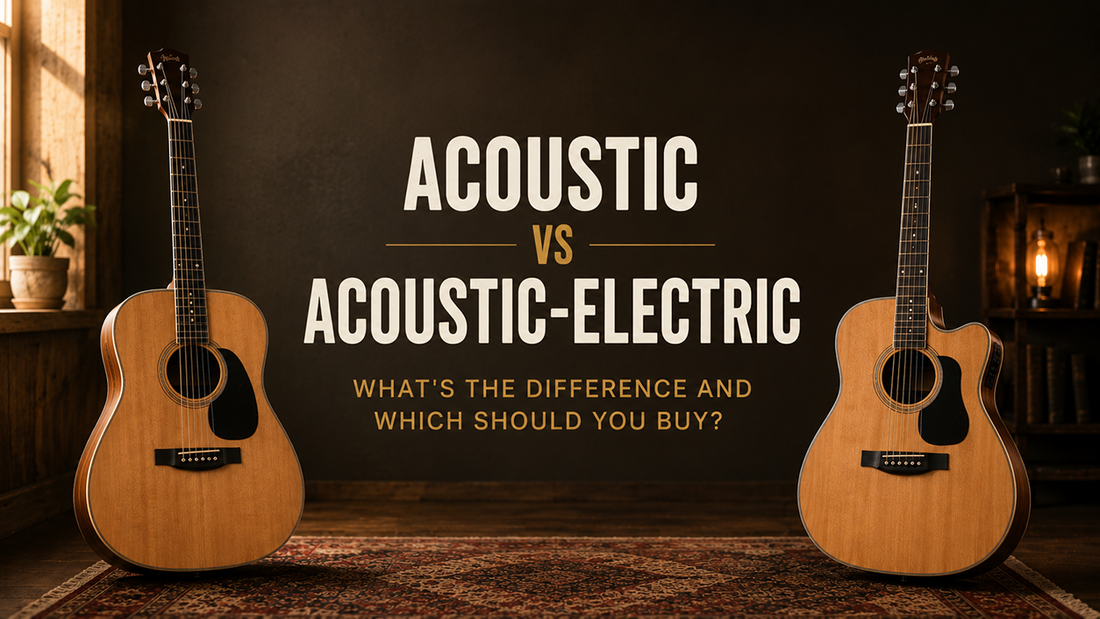
An acoustic-electric guitar is a standard acoustic guitar with a built-in pickup system and preamp. When unplugged, it plays and sounds exactly like a regular acoustic. When plugged into a PA system, acoustic amplifier, or audio interface, the pickup converts the guitar's acoustic vibration into an electrical signal that can be amplified, recorded, or processed.
How Acoustic-Electric Pickup Systems Work
Most acoustic-electric guitars use a piezoelectric pickup — a thin strip of crystalline material installed beneath the saddle. When the saddle transmits string vibrations, it compresses the piezo element, generating a small electrical signal. That signal passes through an onboard preamp before reaching the output jack.
WHAT'S TYPICALLY ON THE PREAMP PANEL
- Volume control — adjust output level independently of your playing dynamics
- EQ controls — typically bass, middle, and treble shaping
- Built-in chromatic tuner — one of the most practical daily-use features
- Low battery indicator — most systems use a 9V battery lasting 80–120 hours
- Notch filter — on better systems, suppresses feedback at high stage volumes
Key Differences at a Glance
| Feature | Pure Acoustic | Acoustic-Electric |
|---|---|---|
| Amplification | Acoustic projection only | Plugs into PA, amp, or audio interface |
| Price Premium | Lower baseline | Typically $50–$200 more than equivalent pure acoustic |
| Battery | Not required | 9V battery — 80–120 hours of plugged-in use |
| Unplugged Sound | Standard acoustic tone | Identical — pickup has zero effect when unplugged |
| Tone Control | None — shaped by body and wood | Built-in EQ for shaping the amplified signal |
| Live Performance | Requires microphone placement | Direct connection — plug in and play |
| Direct Recording | Microphone only | Direct input or mic — player's choice |
Pickup System Quality: Why It Matters So Much
The quality of the electronics matters enormously for live performance. A cheap piezo can make a great-sounding acoustic guitar sound thin, nasal, or artificial through a PA. Upgrading to a quality pickup system — or starting with a guitar that has one — makes a dramatic difference on stage.
Budget Piezo (Generic)
Fair sound — can be thin or plastic-sounding. Adequate for casual gigging where tone expectations are low. Found on guitars under $300.
Best for: Beginners, casual gigging, occasional open mics.
Fishman Sonitone / Aura
Good to very good — improved warmth, presence, and signal shaping. Fishman's Aura system adds sophisticated signal processing that more accurately models a mic'd acoustic tone.
Best for: Regular gigging at small to medium venues.
LR Baggs Anthem / Taylor ES2 / ES-B
Excellent — the most natural acoustic reproduction available in an undersaddle or behind-saddle system. These systems are used by touring professionals because they genuinely sound like a mic'd acoustic guitar.
Best for: Professional live performance, recording direct, stage-ready sound.
🌟 FEATURED BUILDER: Byron Custom Guitars
Want a Guitar Built Exactly the Way You Imagine It?
Every guitar listed here is a production instrument — built to a fixed spec, in large numbers. If you've ever wanted something different, something that is truly your own, that's where Byron Custom Guitars comes in.
Byron is a custom guitar workshop where every instrument is handbuilt to order by a skilled team of craftsmen. When you order a Byron guitar, you choose everything:
- Body shape — dreadnought, parlor, jumbo, OM, Grand Auditorium, super jumbo, and more
- Tonewoods — including rare imported exotic woods you can browse in the gallery
- Inlay designs — custom patterns and artwork inlaid into the fretboard and headstock
- Headstock shape, body binding, finish colour, and pickguard design
Build-progress photos arrive every two weeks so you can watch your instrument come to life. Every custom guitar ships free worldwide and includes a free hard case.
Build Time
8–10 weeks
Shipping
Free worldwide
Case
Hard case included
Customisation
Full spec-to-order — truly one of a kind
👉 Start designing your custom guitar at ByronCustomGuitars.com
When Do You Actually Need an Acoustic-Electric?
You NEED one if you...
- Perform live regularly at open mics, gigs, or events
- Play with other musicians in a band or jam
- Use a looper pedal for solo performance
- Record directly into an audio interface
- Play large venues or festivals
You DON'T need one if you...
- Practise primarily at home
- Are a complete beginner still learning basics
- Record only using studio microphones
- Play classical or nylon-string guitar
- Have a tight budget — invest in wood quality first
💡 Buyer's Tip
For most beginners, a pure acoustic is the smarter initial purchase. At entry-level prices ($150–$350), money spent on electronics is better used for a better guitar with a solid top. Buy electronics when you have a real performance need for them.
Best Acoustic-Electric Models by Budget
Yamaha FX335C | $200–$280
Yamaha's System 55T preamp is reliable and honest — no gimmicks. The FX335C delivers solid entry-level tone plugged in and a perfectly functional acoustic unplugged. The best value acoustic-electric at this price point.
Best for: Beginners who know they'll need to perform live soon.
Seagull Entourage CW QIT | $450–$600
All-solid Canadian construction with Godin's QIT electronics — a genuinely underrated pickup system. The all-solid build means the acoustic tone is excellent, and the electronics represent it faithfully through a PA.
Best for: Intermediate players who gig regularly and want a truly all-solid instrument.
Taylor 214ce | ~$999
The benchmark acoustic-electric under $1,000. V-Class bracing dramatically improves intonation and sustain. The ES-B pickup system delivers one of the most natural plugged-in acoustic sounds available at any price under $2,000. A guitar players keep for decades.
Best for: Serious players, singer-songwriters, and performers who want one guitar that does everything.
Gibson J-45 Standard EC / Taylor 314ce
Professional-grade instruments with all-solid construction and stage-ready electronics. The J-45 EC uses LR Baggs VTC for its warm, organic plugged-in sound. The 314ce offers Taylor's flagship ES2 system and all-solid build. Both are instruments for life.
Best for: Professional performers who need stage-ready tone they can rely on night after night.
Types of Acoustic Pickup Systems Compared
| System Type | How It Works | Sound Character |
|---|---|---|
| Undersaddle Piezo | Crystal strip beneath saddle detects vibration | Direct — can be bright or thin at budget tier |
| Soundhole Magnetic | Magnetic pickup in soundhole like an electric | Warmer, more electric guitar-like tone |
| Microphone-Based | Small condenser mic inside the body | Most natural — closest to a mic'd acoustic |
| Hybrid (Mic + Piezo) | Blend of two signals with a mixer | Natural acoustic sound with usable stage volume |
Final Thoughts
An acoustic-electric guitar is not a different instrument — it is an acoustic guitar with options. When you need to perform, record direct, or use a looper, those options become essential. When you're practising at home or recording with microphones, they're irrelevant.
Choose the right guitar first — prioritise solid-top construction, good action, and quality build. Then decide whether you need the electronics. And when you're ready to build your perfect instrument from the ground up, Byron Custom Guitars builds every guitar to order — with or without pickup systems, exactly as you specify.
👉 Browse all models at ByronCustomGuitars.com
Ready to own a guitar built exactly the way you want it? Start with Byron Custom Guitars — free worldwide shipping, hard case included.
Design Your Custom Guitar Browse Ready-to-Ship Models